.png)


Western Sealtech diaphragms are flexible sealing elements designed to regulate, isolate, and control fluids, gases, and pressure within valves, pumps, and actuators. Engineered for high cycle life, chemical compatibility, and dimensional stability, our diaphragms deliver consistent performance even under aggressive media, pressure fluctuations, and demanding duty cycles.
Diaphragms
High-performance rubber & PTFE diaphragms engineered for precise fluid control, long flex life, and reliable isolation across demanding industrial applications.
.avif)
.avif)
Diaphragms
- Material Grades & Options
- Sizes and Configurations
- Pressure Performance Data
.avif)
6.2 MB
Diaphragms engineered to flex. isolate. perform.

Types of Diaphragms
Diaphragms are classified based on motion, pressure demand, media compatibility, and application geometry to ensure optimal sealing performance and service life.
.avif)
Homogeneous Rubber Diaphragms
Moulded entirely from a single elastomer compound. Used for moderate pressure and general-purpose applications. Provide uniform flexibility and consistent sealing behavior.
.avif)
Fabric-Reinforced Diaphragms
Incorporate a fabric layer bonded within the elastomer. Reinforcement limits deformation and improves pressure and cycle resistance. Selected for high-cycle and higher-pressure applications.
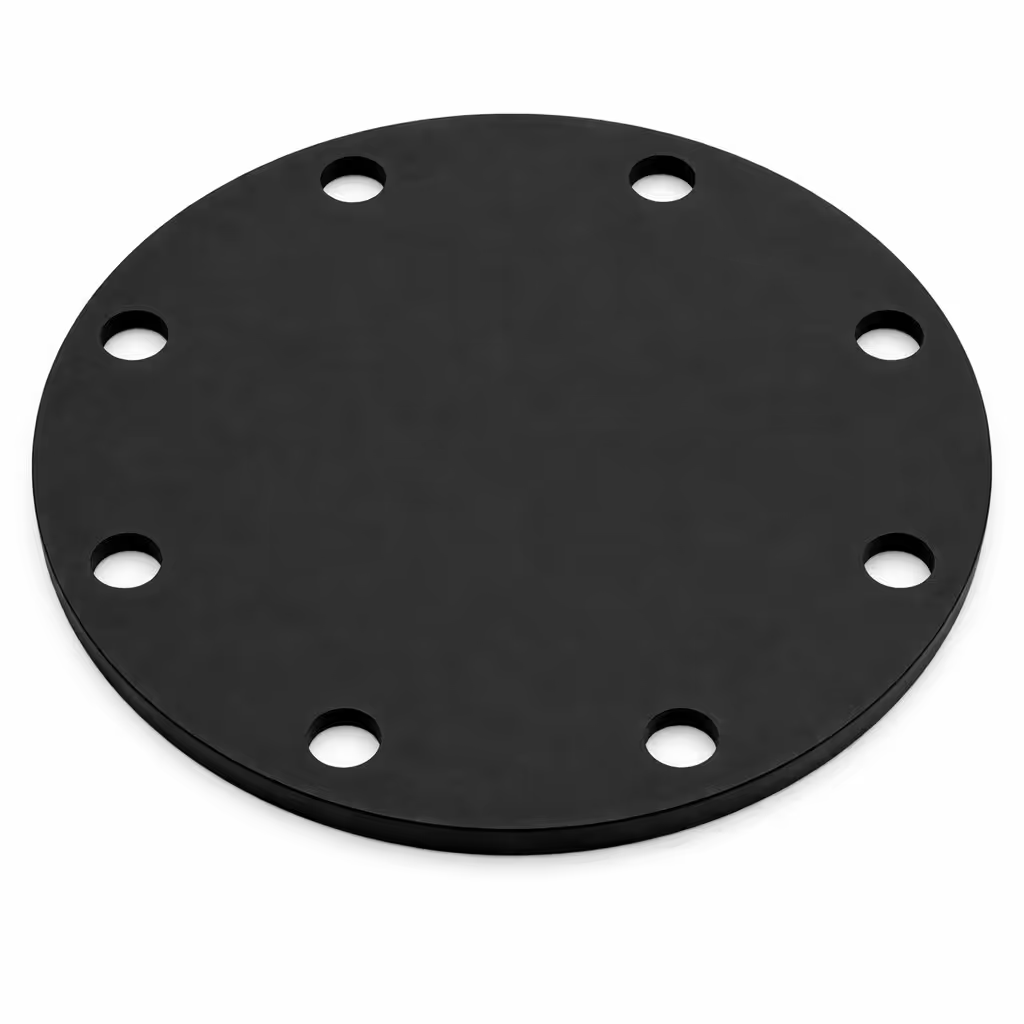
Flat Diaphragms
Simple flexing diaphragms used in low-stroke applications. Suitable for static or lightly dynamic systems.

Convoluted Diaphragms
Feature molded folds to allow greater stroke length. Reduce material stress and improve cycle life. Used in actuators and regulators.
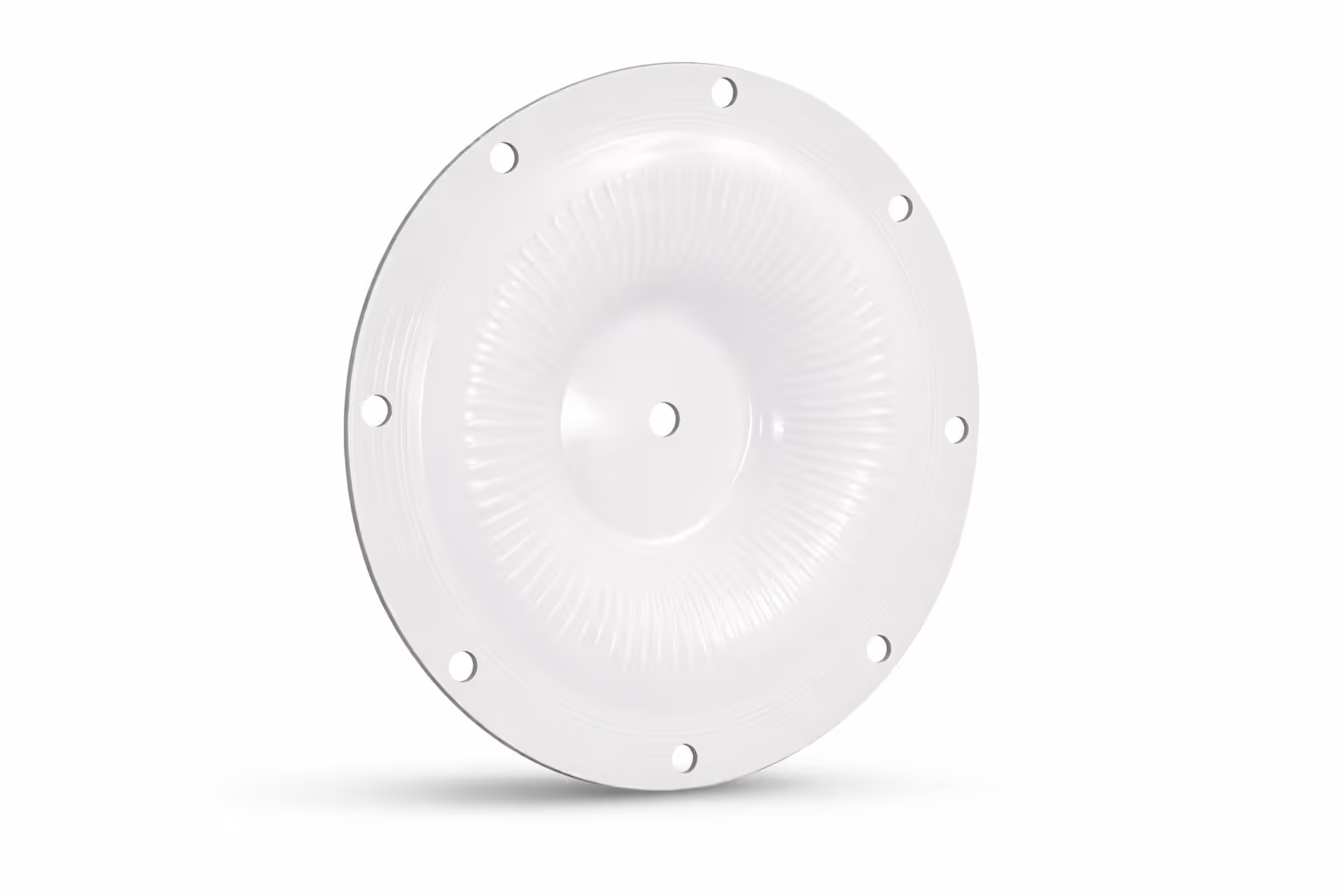
Pump Diaphragms
Pump diaphragms displace fluid while isolating it from mechanical components. They are designed for repeated cycling and pressure variation. Used in AODD pumps, dosing pumps, metering pumps, and rolling valve pumps.

Valve Diaphragms
Valve diaphragms regulate flow by flexing under pressure or actuation. They provide tight shut-off and media isolation without sliding seals. Commonly used in diaphragm valves, control valves, and pinch valves.
Technical Capabilities
Western Sealtech manufactures precision rubber diaphragms designed for pressure regulation, actuation, and fluid control in Railways, Valves, Pumps, Actuators, and Industrial Systems.
Operating Performance
.png)
Pressure Range
Vacuum to 25 bar
(application dependent)
Temperature Range (Material Dependent)
-50°C to +220°C
Flex Life
High-cycle performance up to 1 million+ cycles (design dependent)
Materials & Reinforcement

Elastomers Available
EPDM
Silicone (VMQ)
FKM
NBR
Neoprene
HNBR
Custom engineered compounds
Compliance Options
FDA-grade
REACH
RoHS
Oil Resistant
Petrochemical Resistant
Radiation proof
Reinforcement Options
Nylon fabric
Polyester fabric
Aramid fabric
PTFE lamination
Metal inserts (if required)
Testing & Quality

- Mullens Burst Test
- Flex cycle validation ( on request )
- Dimensional tolerance control
- Material batch traceability
- 100% visual inspection
Engineering Support

- Design optimization for stroke life
- Tooling development
- Rapid prototyping
- Small to high-volume production
Operating Performance
Pressure Range
Vacuum to 25 bar
(application dependent)
Temperature Range (Material Dependent)
-50°C to +220°C
Flex Life
High-cycle performance up to 1 million+ cycles (design dependent)
Materials & Reinforcement
Elastomers Available
EPDM
Silicone (VMQ)
FKM
NBR
Neoprene
HNBR
Custom engineered compounds
Compliance Options
FDA-grade
REACH
RoHS
Oil Resistant
Petrochemical Resistant
Radiation proof
Reinforcement Options
Nylon fabric
Polyester fabric
Aramid fabric
PTFE lamination
Metal inserts (if required)
Testing & Quality
- Mullens Burst Test
- Flex cycle validation ( on request )
- Dimensional tolerance control
- Material batch traceability
- 100% visual inspection
Engineering Support
- Design optimization for stroke life
- Tooling development
- Rapid prototyping
- Small to high-volume production
Key Benefits

Superior flex life under cyclic loading
Optimized elastomer formulations and fabric reinforcement ensure repeatable movement without fatigue, cracking, or loss of sealing integrity—even in high-cycle applications

Reliable isolation of fluids & contaminants
Diaphragms act as a flexible barrier between two chambers, preventing cross-contamination, leakage, or media ingress in critical process equipment.

Designed for aggressive media & pressure conditions
Fabric-reinforced and PTFE-lined diaphragms handle corrosive chemicals, abrasive slurries, vacuum conditions, and pressures up to 68 bar (1000 psi).
Our Core Industries
Rail and Mass Transit
Semiconductor
Powder & Bulk Handling
Actuator Valve
Pharmaceutical
.avif)
Rail & Mass Transit
Fire-safe profiles for doors, windows, HVAC
Explore Industry
.avif)
Semiconductor
Heat-resistant components designed for high-pressure
Explore Industry
.avif)
Powder & Bulk Handling
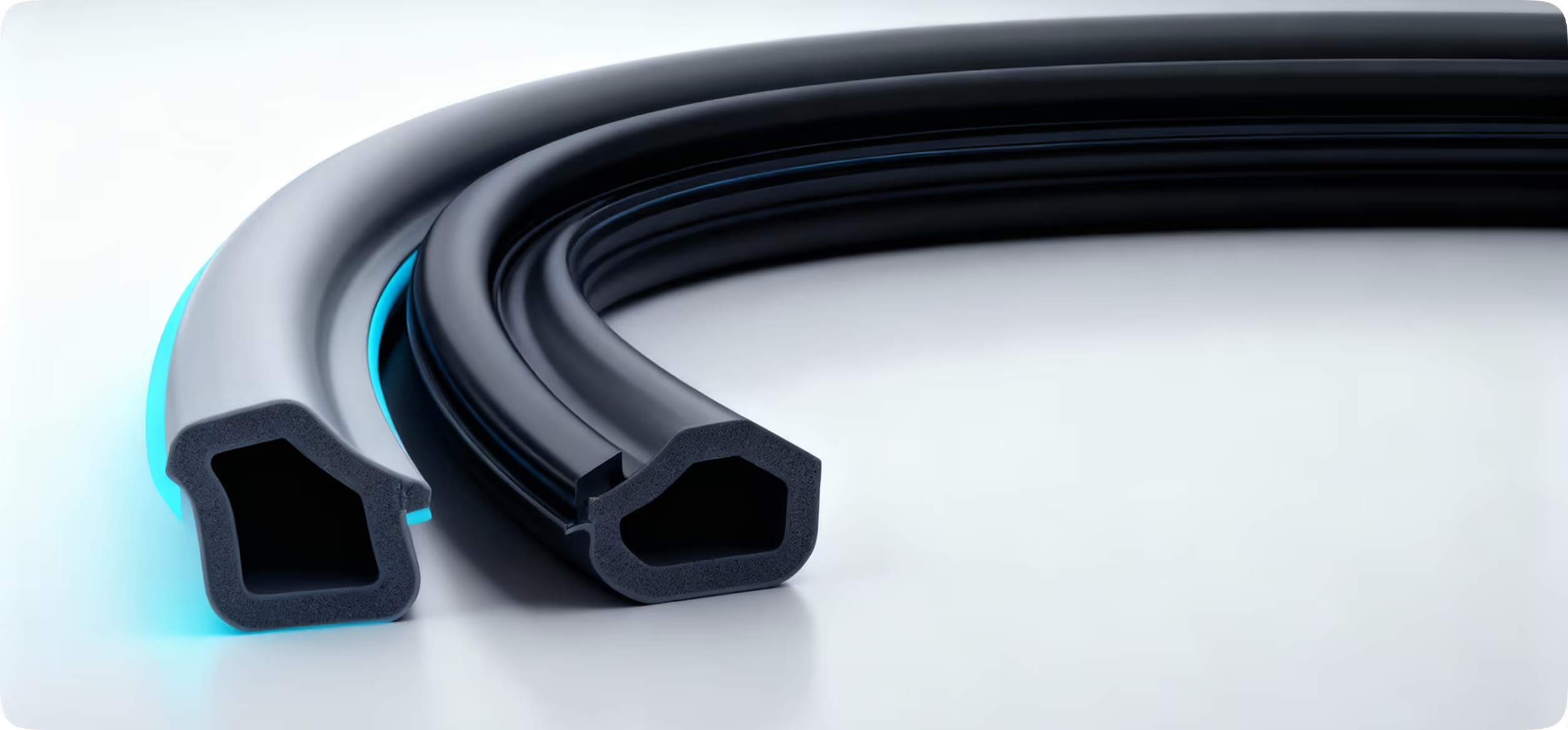
Leak-proof inflatable seals for dust-tight material flow
Explore Industry
.avif)
Actuator Valve
Heat-resistant components designed for high-pressure
Explore Industry
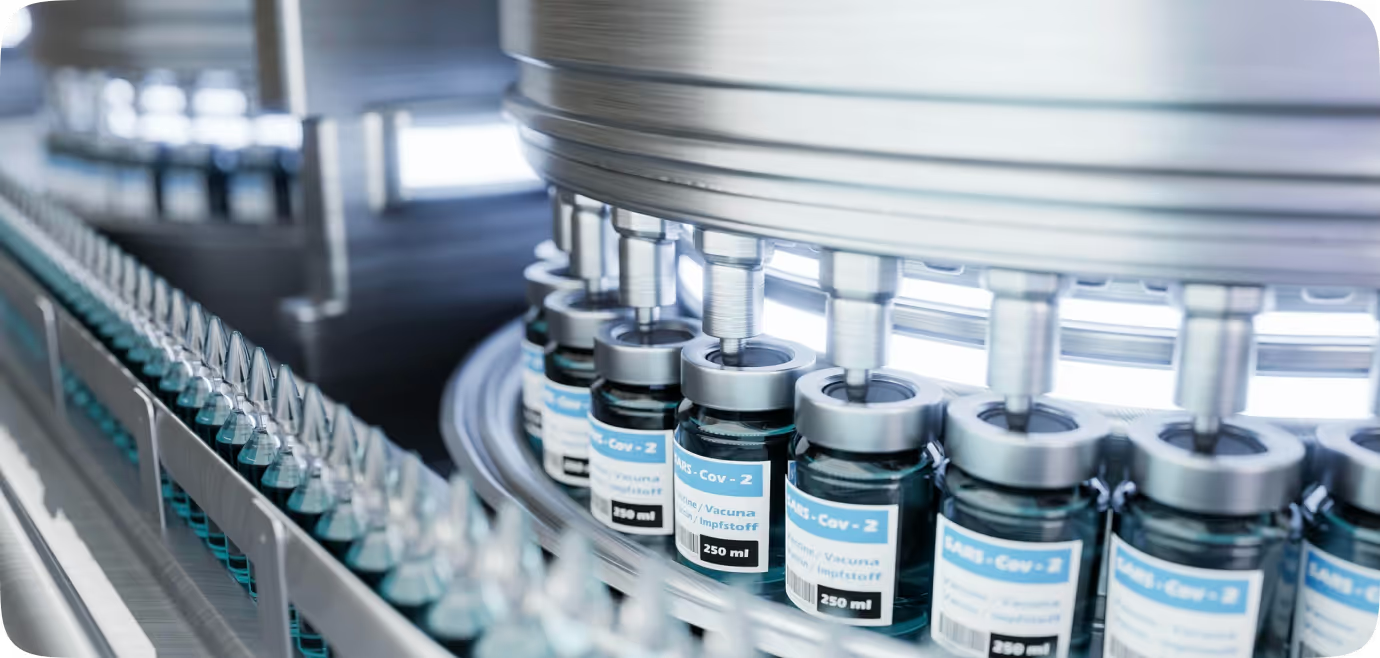
Pharmaceutical
Sterile inflatable seals & hygienic tubing solutions.
Explore Industry
Industries We Serve
.avif)
Rail & Mass Transit
Fire-safe profiles for doors, windows, HVAC
Semiconductor
Heat-resistant components designed for high-pressure
Explore Industry
Powder & Bulk Handling
Leak-proof inflatable seals for dust-tight material flow
Explore Industry
Pumps & Valves
Heat-resistant components designed for high-pressure
Pharmaceutical
Sterile inflatable seals & hygienic tubing solutions.
Industries We Serve
Oil & Gas
Pharmaceutical
Industrial Furnaces & Autoclaves
Actuator Valve
Nuclear Power & Radiation
.avif)
Oil & Gas / Chemical Processing
Diaphragms are used in valves, pumps, and control equipment to safely handle hydrocarbons, acids, caustics, and solvents, providing reliable isolation and long service life in aggressive process conditions.
Explore industry
.avif)
Pharmaceutical & Food Processing
High-purity rubber and PTFE diaphragms support hygienic operation in dosing systems, valves, and pumps, helping maintain contamination control, repeatability, and compliance in regulated environments.
Explore industry
.avif)
Pulp, Paper, Cement & Mining
Rolling and molded diaphragms enable smooth, accurate motion in pneumatic and hydraulic actuators, delivering long stroke life, low friction, and consistent performance over high cycle counts.
Explore industry
.avif)
Actuators & Automation Systems
Rolling and molded diaphragms enable smooth, accurate motion in pneumatic and hydraulic actuators, delivering long stroke life, low friction, and consistent performance over high cycle counts.
Explore industry
.avif)
Nuclear Industry
Diaphragms are used in control systems, isolation assemblies, and monitoring equipment where dependable separation, dimensional stability, and predictable operation are required under radiation exposure and strict safety standards.
Explore industry
Industries We Serve
Oil & Gas / Chemical Processing
Diaphragms are used in valves, pumps, and control equipment to safely handle hydrocarbons, acids, caustics, and solvents, providing reliable isolation and long service life in aggressive process conditions.
Explore industry
Pharmaceutical & Food Processing
High-purity rubber and PTFE diaphragms support hygienic operation in dosing systems, valves, and pumps, helping maintain contamination control, repeatability, and compliance in regulated environments.
Explore industry
Pulp, Paper, Cement & Mining
Rolling and molded diaphragms enable smooth, accurate motion in pneumatic and hydraulic actuators, delivering long stroke life, low friction, and consistent performance over high cycle counts.
Explore industry
Actuators & Automation Systems
Rolling and molded diaphragms enable smooth, accurate motion in pneumatic and hydraulic actuators, delivering long stroke life, low friction, and consistent performance over high cycle counts.
Explore industry
Nuclear Industry
Diaphragms are used in control systems, isolation assemblies, and monitoring equipment where dependable separation, dimensional stability, and predictable operation are required under radiation exposure and strict safety standards.
Explore industry
FAQs
Explore our FAQs for quick answers to common questions. For deeper insights, check out:
How do I select the right diaphragm material for my application?

Material selection depends on temperature, pressure, media compatibility, and cycle frequency. EPDM, FKM, silicone, and PTFE are chosen based on chemical exposure and operating limits. Our engineers review application data to recommend the correct compound.
When should I use fabric-reinforced diaphragms?
Fabric reinforcement is recommended for high-pressure, high-temperature, or high-cycle applications where dimensional stability and burst resistance are critical.
What causes premature diaphragm failure?
Incorrect material selection, excessive stroke, chemical incompatibility, or improper installation are common causes. Design review and correct diaphragm geometry significantly improve service life.
Can diaphragms handle abrasive or viscous media?
Yes. Reinforced rubber and PTFE diaphragms are engineered for slurries, viscous fluids, and abrasive particles without loss of sealing or flex performance.
Do you offer OEM replacement diaphragms?
Yes. We manufacture direct OEM-replacement diaphragms with equivalent or improved performance, often at reduced lead time and cost.
Are custom sizes and geometries available?
Absolutely. With in-house tooling and molding, diaphragms from ¼″ to 55″ diameter can be manufactured to match exact application requirements.
How is diaphragm quality ensured?
All diaphragms undergo 100% quality checks with strict control over materials, reinforcement placement, molding accuracy, and batch traceability.
Download our Brochures

Inflatable Seals
12.3 MB
Inflatable Seals
12.3 MB
Inflatable Seals
12.3 MB
Inflatable Seals
12.3 MB
Inflatable Seals
12.3 MB
Inflatable Seals
12.3 MB
Inflatable Seals
12.3 MB
Inflatable Seals
12.3 MB
Inflatable Seals
12.3 MB
Inflatable Seals
12.3 MB


.avif)