.png)


Posted on
August 14, 2026
Rubber Extrusion & Profile Manufacturing: The Definitive Guide
How rubber extrusion works — the process, materials, tolerances, curing methods and quality control behind custom rubber profiles, cords and strips.
Rubber extrusion is the process behind an enormous share of the seals, gaskets and profiles that keep machinery, buildings and vehicles weathertight. It is deceptively simple to describe and genuinely difficult to do well. This guide explains how rubber extrusion works, what materials and tolerances are achievable, and what separates a reliable extruded profile from a dimensionally unstable one.
What rubber extrusion is
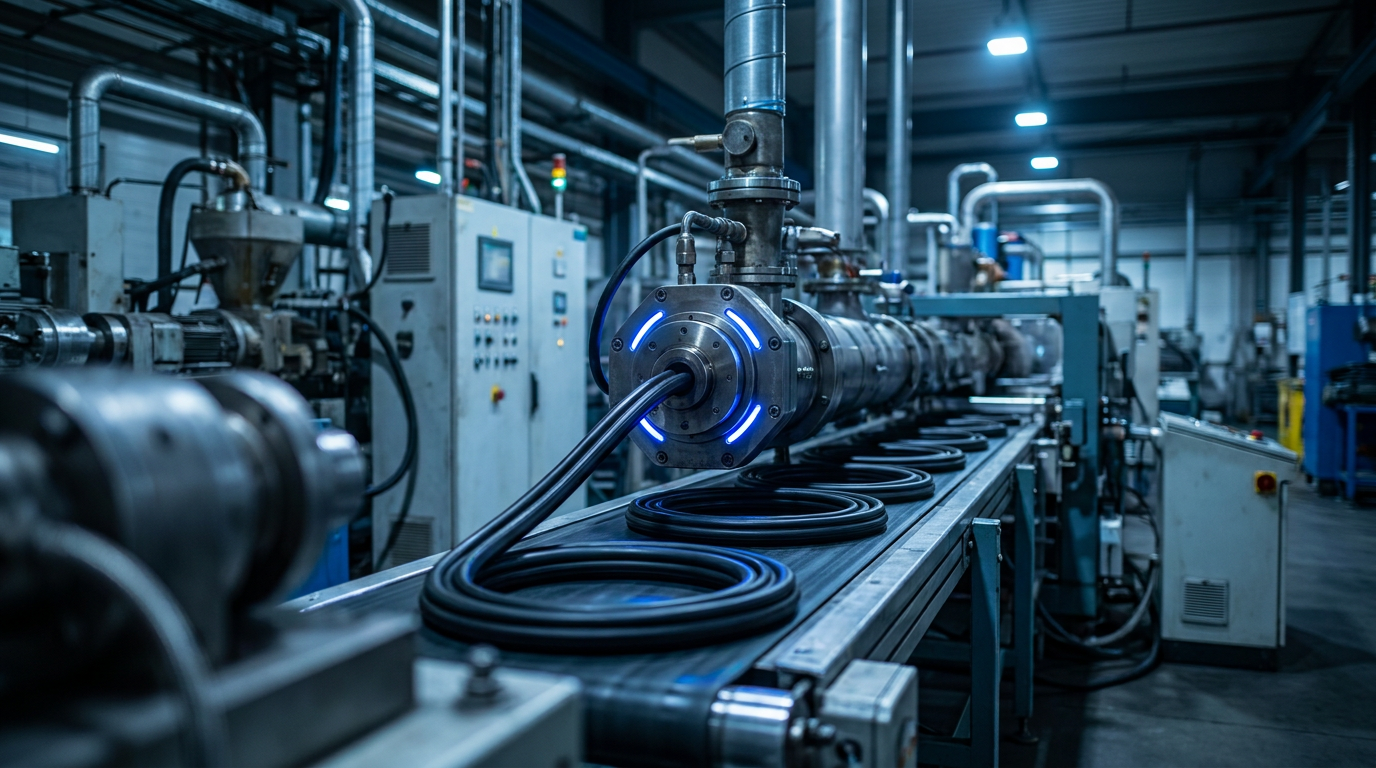
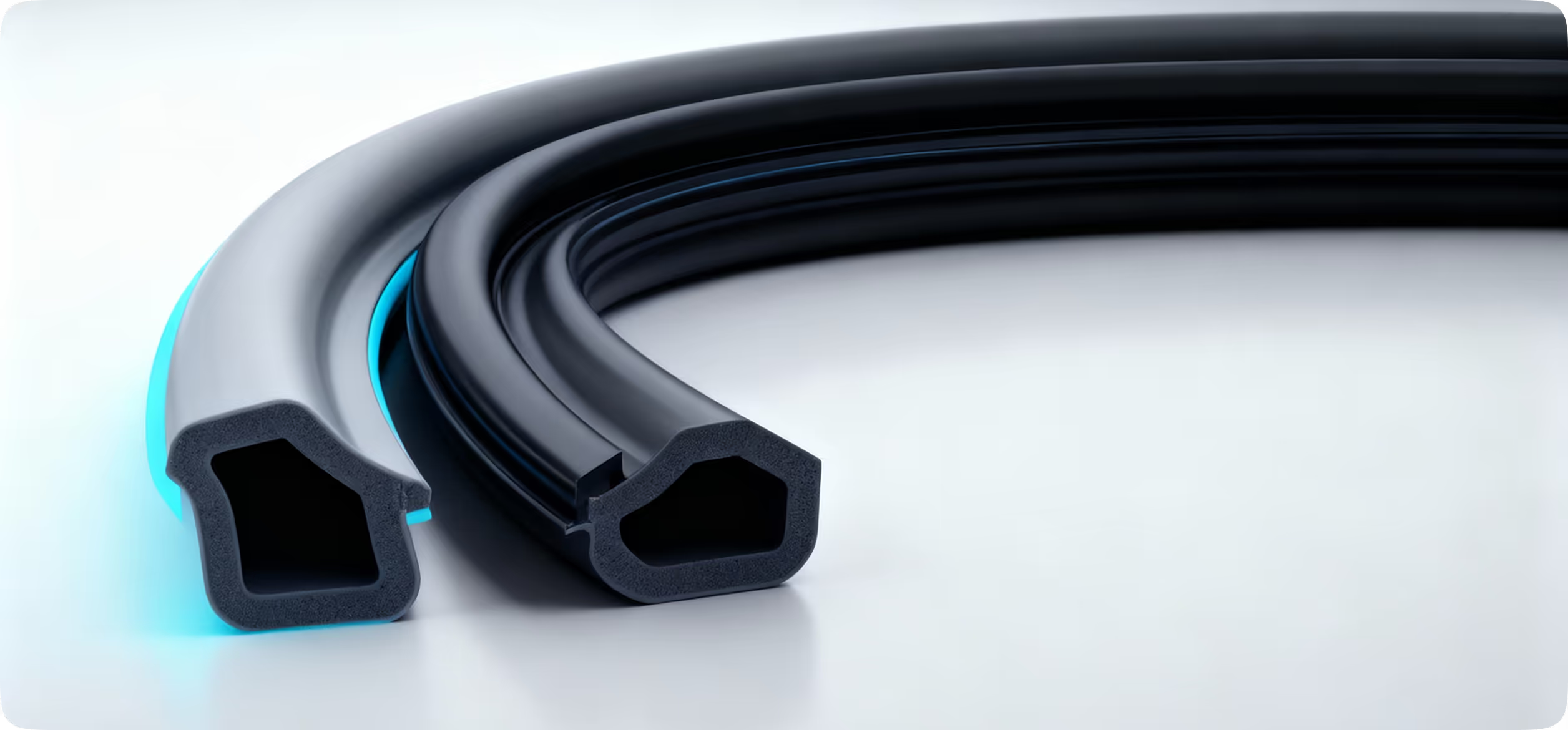
In extrusion, uncured rubber compound is forced continuously through a shaped die to produce a profile of constant cross-section — a cord, strip, tube or complex custom shape — which is then vulcanised (cured) to lock in its elastic properties. Unlike moulding, which produces discrete parts, extrusion produces continuous lengths, making it the natural process for seals, gaskets, edge trims and gasketing that run for metres or are cut to length. We group our extruded output into four families: sponge extruded seals, rubber cord, rubber strip and custom rubber profiles.
Extrusion vs moulding: choosing the right process
Extrusion and moulding solve different problems, and specifying the wrong one wastes time and money. Extrusion produces continuous lengths of constant cross-section — cords, strips, tubes and profiles — economically and at high volume, and is the natural choice for seals and gaskets sold by the metre or spliced into frames. Moulding produces discrete three-dimensional parts with varying cross-section — O-rings, complex gaskets, bespoke components — where each part is formed individually. A useful test: if the part has a constant cross-section along its length, it is an extrusion candidate; if its shape changes in three dimensions, it needs moulding. Many finished seals combine both, using extruded profile spliced and vulcanised into a closed shape.
The extrusion process, step by step
A well-run extrusion line is a sequence of controlled stages, each of which influences the final dimensions and properties:
- Compounding: the base elastomer is mixed with fillers, curatives, plasticisers and process aids to hit target hardness, colour and performance. Consistent compounding is the foundation of dimensional consistency downstream.
- Feeding and extrusion: the compound is fed into the extruder barrel where a screw conveys, warms and pressurises it, then forces it through the die. Die design is where a two-dimensional drawing becomes a real profile — and dies must be cut to account for die swell, the tendency of rubber to expand as it leaves the die.
- Curing / vulcanisation: the extrudate passes through a continuous curing system — hot air, salt bath, microwave or steam — that cross-links the polymer and fixes the shape. Cure time and temperature are tuned to the compound and profile mass.
- Cooling, measurement and cut-off: the cured profile is cooled, continuously measured and cut to length or coiled.
Curing methods and why they matter
The curing stage fixes the profile's final shape and properties, and the method is matched to the compound and geometry. Hot-air curing is versatile and widely used; salt-bath (LCM) curing supports dense, dimensionally stable profiles; microwave curing heats the profile uniformly from within, which suits thicker sections; and steam curing is used for particular compounds and forms. The cure system chosen affects surface finish, dimensional consistency and throughput, which is why an experienced extruder selects it deliberately rather than treating all profiles the same.
Materials and where they fit
The elastomer defines what the profile can withstand. We extrude EPDM, silicone, FKM, NBR, neoprene, TPE and custom in-house blends. EPDM leads for weather, ozone and water; silicone for temperature extremes and purity; FKM for aggressive chemicals and high heat; NBR for oils and fuels; neoprene for balanced general-purpose duty; and TPE where recyclability and processing speed matter.
Hardness across our extrusion range is tuneable from a soft 10 Shore A up to a firm 90 Shore A, with sponge (closed-cell) variants available where compression and light weight matter more than strength. Two practical notes on that range: below roughly 20 Shore A the reading sits at the edge of the Shore A scale and is more reliably measured on the Shore 00 scale, and very soft compounds can show minor surface irregularity as the profile leaves the die — worth knowing where appearance matters. Note also that this is the extrusion range specifically; moulded and inflatable products have their own bands.
Tolerances and dimensional control
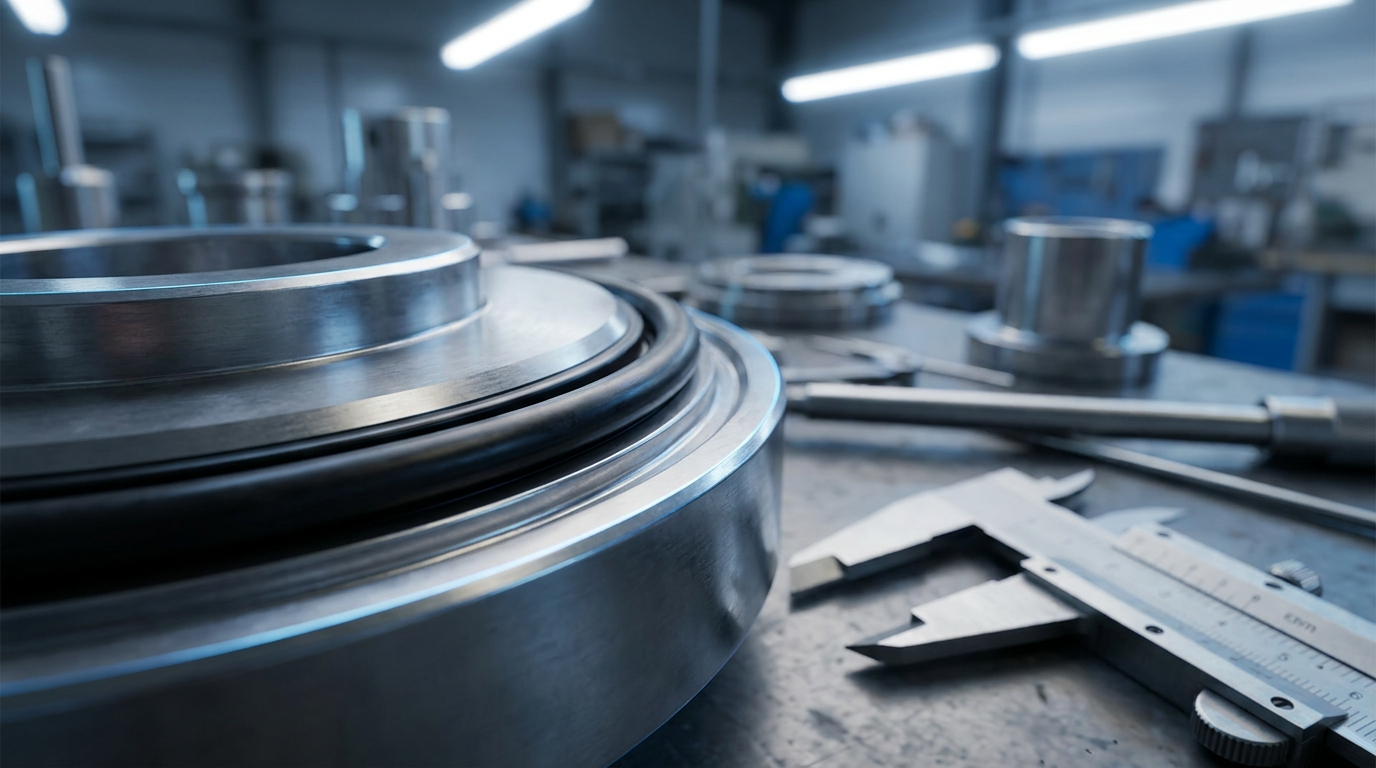
Extruded rubber is a living material — it swells at the die, shrinks on cure and is sensitive to temperature and line speed — so holding tight tolerances is a genuine engineering achievement rather than a given. Reputable manufacturers control it through disciplined compounding, purpose-cut dies, stable line conditions and continuous in-process measurement. We hold tolerances through process monitoring and QC checks, with the achievable band depending on profile geometry: simple cords and strips hold tighter than large or intricate hollow profiles. The practical takeaway for designers is to specify tolerances that reflect the profile's complexity rather than defaulting to the tightest possible on every dimension.
Quality control that matters
Dimensional stability is only half the story; material performance must be verified too. A robust QC regime includes dimensional verification against the drawing, hardness testing, tensile and elongation analysis, and compression-set validation to confirm the profile will recover after being squeezed in service. Compression set is especially important for sealing profiles — a compound that takes a permanent set will leak long before it wears out. Insisting on these checks is how you tell a controlled extrusion from a cosmetically acceptable one.
From drawing or sample to production
A capable extrusion partner can develop a profile from a CAD drawing or from a physical sample of an existing part, design the die in-house, prototype rapidly to prove the geometry and compound, then scale to volume production. This end-to-end capability shortens development time and keeps accountability for dimensions and materials with one supplier rather than splitting it across a die shop and a separate extruder. Where the profile is genuinely bespoke — a multi-durometer section, or an obsolete part with no surviving drawing — the development route is worth understanding in its own right.
Applications
Extruded rubber profiles seal, cushion, protect and isolate vibration across rail transit, semiconductor equipment, pharmaceutical and food processing, building facades, paper manufacturing and general industry. Wherever there is a gap to close, an edge to protect or a vibration to damp, an extruded profile is often the most cost-effective answer — provided it is made with controlled dimensions and a compound matched to the environment. The difference between a profile that works for fifteen years and one that fails in its second winter is almost never the shape; it is the compound behind it and the discipline of the line that made it.
Key takeaways
- Extrusion produces continuous constant-section profiles; moulding produces discrete 3D parts.
- Die design must compensate for die swell and cure shrinkage — this is specialist work.
- Compound consistency and stable line conditions are the foundation of dimensional control.
- Insist on hardness, tensile, elongation and compression-set testing, not just dimensional checks.
- A partner who works from a drawing or a sample and designs dies in-house shortens development.
Have a drawing or a sample profile you need matched? Send it over and we will develop the die, prototype the profile and validate the compound for your application.
Need a custom sealing solution?
Talk to our engineers about inflatable seals, rubber diaphragms and custom extrusions built to your exact spec. We respond within one business day.
Frequently asked questions
What tolerances can be held on an extruded rubber profile?
It depends entirely on geometry. Simple cords and strips hold considerably tighter than large or intricate hollow sections. A credible manufacturer will tell you which of your dimensions can be held tightly and which are inherently looser, rather than quoting one figure across the drawing.
Can you match an existing profile without a drawing?
Yes. Profile development from a physical sample is a standard route — we measure and reconstruct the cross-section, match the compound by property, and cut a compensated die. It is how obsolete parts are brought back into production.
What is die swell and why does it matter?
Rubber expands as it leaves the die and shrinks again as it cures, so the die aperture is never simply the finished cross-section. Compensating for that behaviour is specialist work and is the main reason in-house die capability shortens development.

Need a quote?
For custom rubber sealing solutions contact us. We will respond to you within 1 business day



.avif)