Request a Custom Sealing Solution
Get responses within 24-48hrs.
Looking for a job? Apply via our Career Page.
Upload drawing file
Thank you! Your submission has been received!
Oops! Something went wrong while submitting the form.
Request a Custom Sealing Solution
Get responses within 24-48hrs.
Looking for a job? Apply via our Career Page.
Thank you! Your submission has been received!
Download
Blue arrow pointing downward.
Oops! Something went wrong while submitting the form.

Fasten in seals

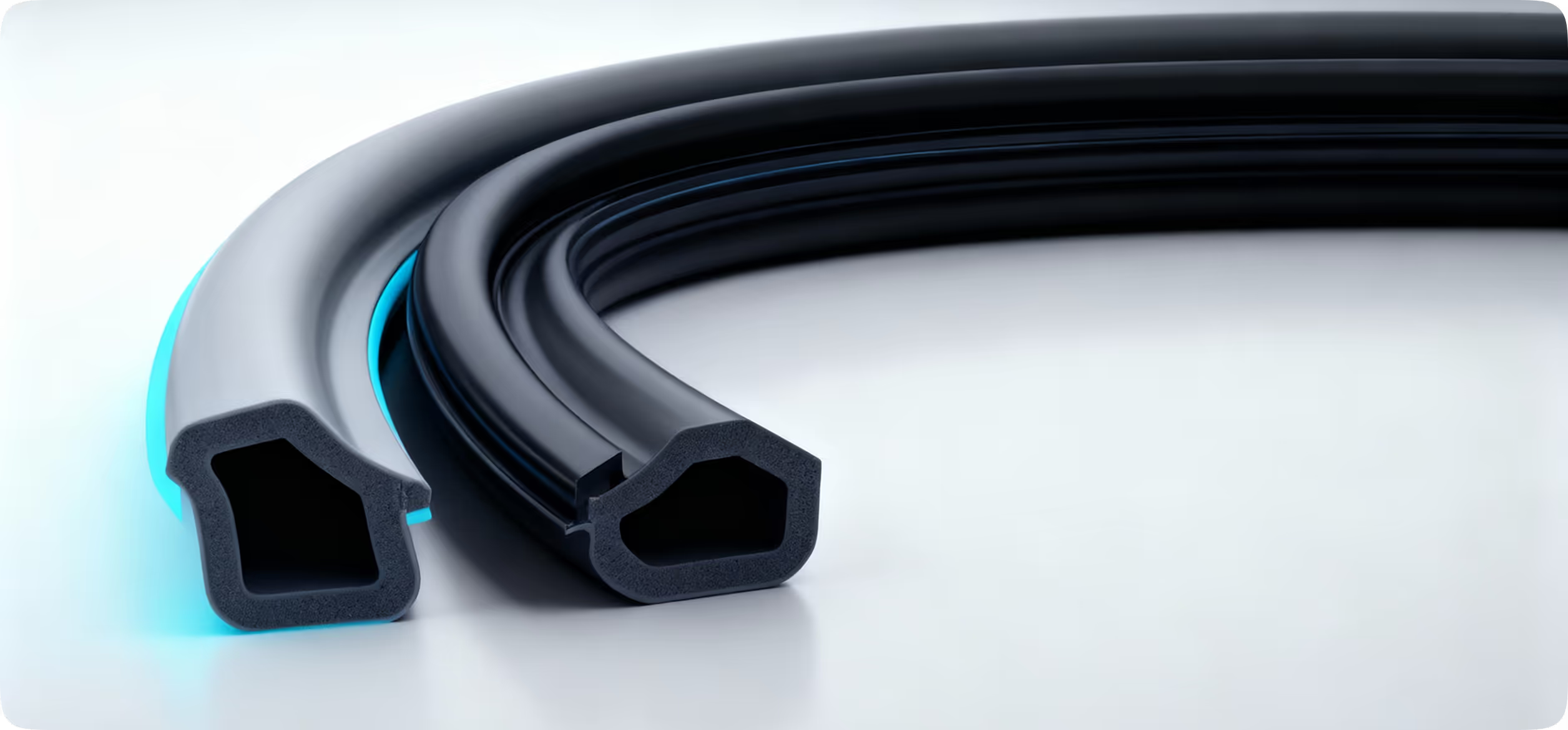
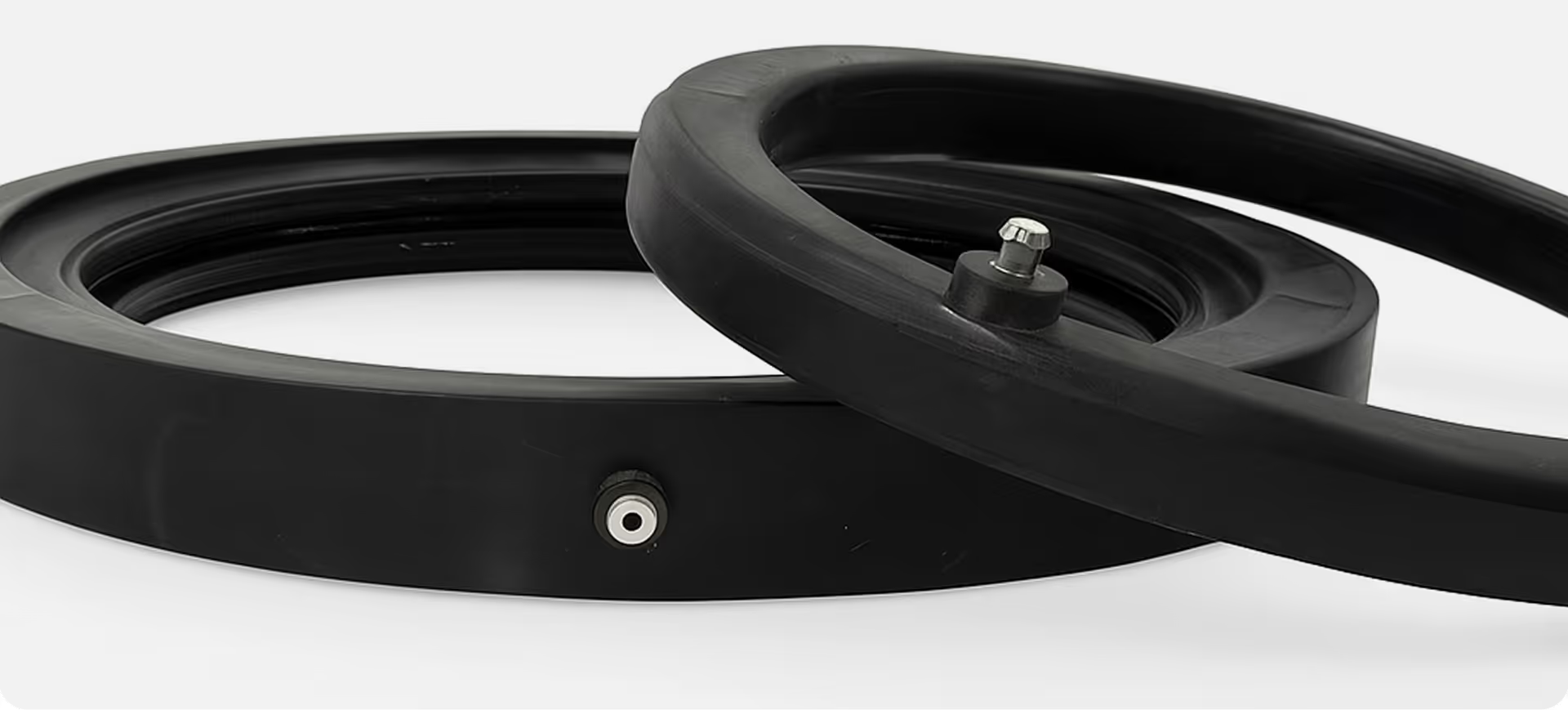
Inflatable seals retained without mechanical foot structures, designed for versatile groove installations.
Design Variants
Round (RD)

Round footless seals are among the most widely used inflatable seal profiles. They provide uniform expansion and are suitable for general sealing applications with simple groove designs.

Dovetail (D)

Dovetail footless seals are designed to improve retention inside the groove. The dovetail geometry helps limit seal movement during inflation and operation.

Dovetail (D)

Fabric-reinforced dovetail seals are used where higher internal pressures or demanding conditions are present. The internal fabric reinforcement improves strength and limits deformation during inflation.

Oblong (O)

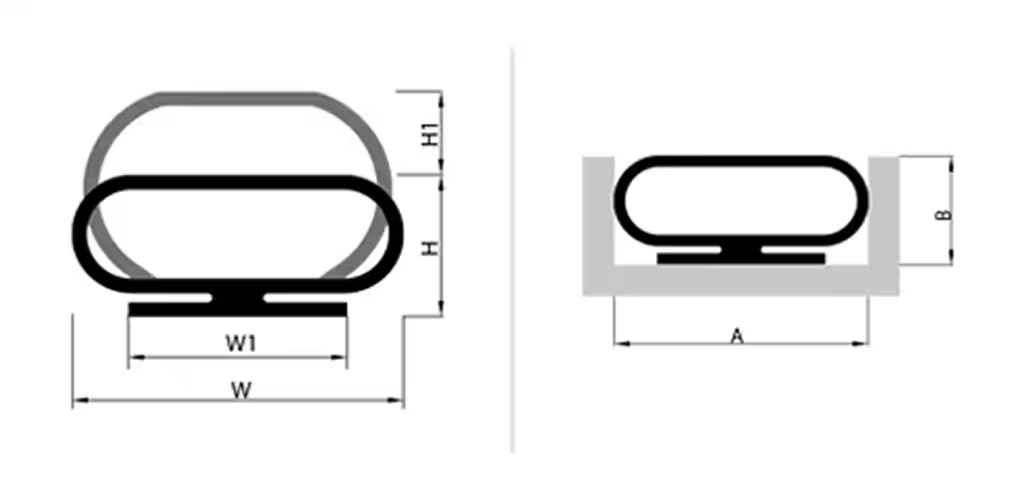
Fabric-reinforced oblong seals are selected for applications requiring added durability. The reinforced structure enhances seal life in challenging operating environments.

Inflatable Seals
  • Seal Profiles & Dimensions
  • Inflation Pressure Data
  • Custom Seal Configurations
Seal Profiles & Dimensions
Icon of a document with PDF written on it and a folded corner.
7.6 MB
Download Brochure

Explore other profiles

Slot-Fit Square Seals

For sealing doors, windows, glass partitions.

Bonded Bottom Seals

For sealing doors, windows, glass partitions.

Snap-In Seals

For sealing doors, windows, glass partitions.

Footless Seals

For sealing doors, windows, glass partitions.

Simple configuration. Multiple retention options.

Footless seals do not have foot-like structures for mechanical retention. They are retained inside grooves using adhesive bonding, ribs, or tight-fit installation. This is one of the simplest and most commonly used inflatable seal configurations.
Contact for custom solution